

Bird flu escalation demands national mobile wildlife hospital network
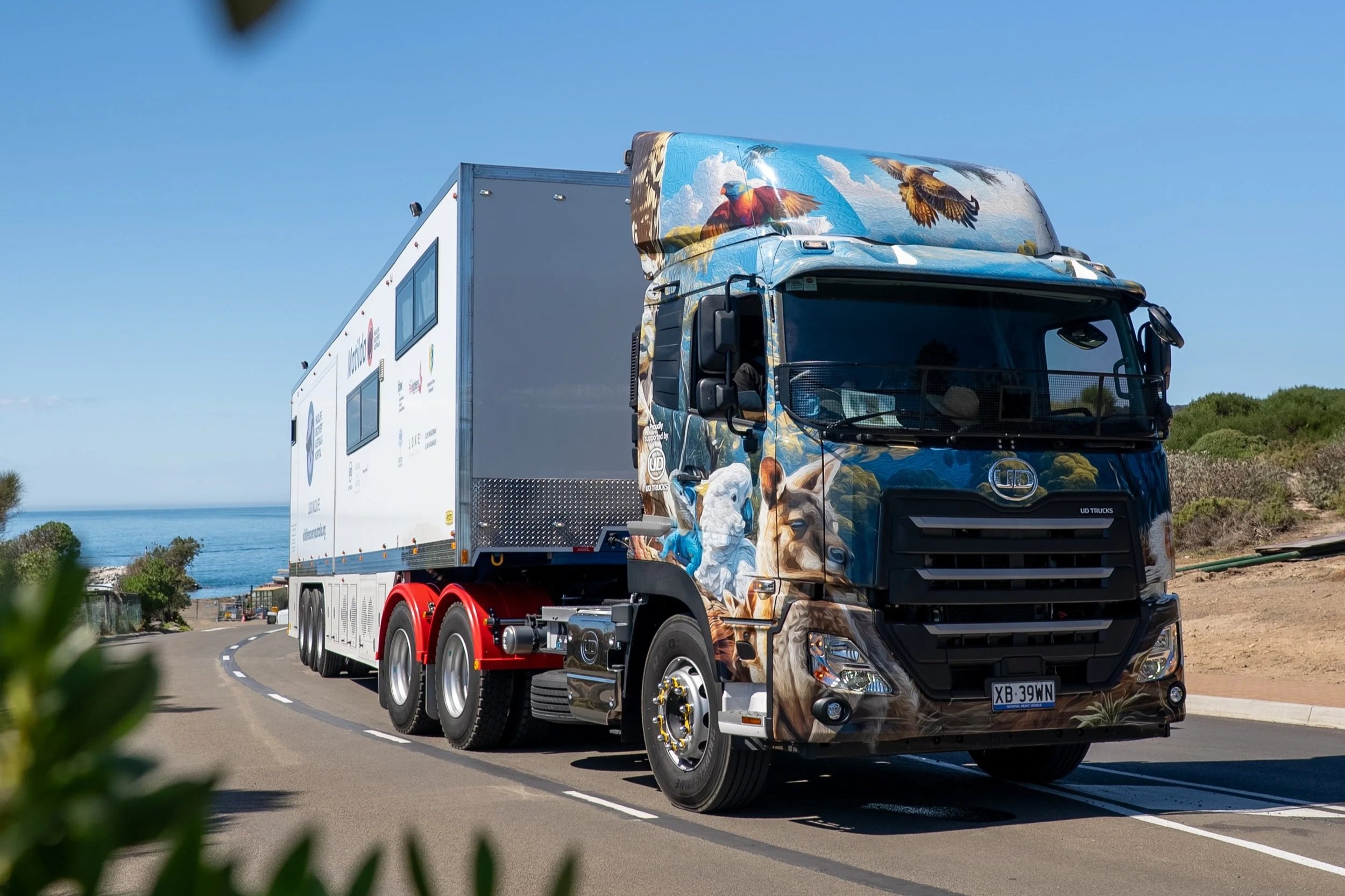
Matilda arrives on Kangaroo Island during stage one of WRA’s National Tour
Wildlife Recovery Australia (WRA) calls on Federal Government to fund rapid-response veterinary hospitals for every state and territory
As H5 bird flu spreads through Australian wildlife and the nation records its first mass mortality event, Wildlife Recovery Australia is calling on the Australian Government to establish a national fleet of mobile wildlife hospitals capable of being deployed wherever the next wildlife emergency occurs.
Wildlife Recovery Australia (WRA), which owns and operates Matilda — Australia's only full-service mobile wildlife hospital — says the rapidly evolving H5N1 situation has exposed a critical gap in Australia's wildlife emergency response capability.
Australia confirmed its first detection of the globally circulating H5N1 strain in June.
Within weeks, the virus had been detected across multiple states and in resident Australian bird species. In early August, authorities confirmed Australia's first H5 bird flu mass mortality event after dozens of Greater Crested Terns were found dead or sick at Baudin Rocks near Cape Jaffa in South Australia.
WRA says Australia now needs to move beyond preparing for the arrival of H5N1 and ensure specialist veterinary capability can be rapidly deployed when wildlife is affected.
“The question is no longer whether H5 bird flu will reach Australia. It is here,” CEO of Wildlife Recovery Australia, Dr Stephen Van Mil said.
“We have invested nationally in surveillance, biosecurity, preparedness and response planning. Those measures are incredibly important. But when a wildlife crisis occurs hundreds, or even thousands of kilometres from a specialist wildlife hospital, we also need the ability to take veterinary capability to the animals.”
Australia needs more Matildas
WRA currently operates Matilda, a purpose-built mobile wildlife hospital capable of taking veterinary facilities and expertise into the field – and the only one of its kind in Australia.
The organisation is now scoping the construction of a second Matilda to be based in Western Australia, and is exploring philanthropic support for its construction and operation.
And while mobile hospitals situated on both the east and west coasts of Australia would dramatically strengthen the country's response capability, WRA says two mobile hospitals are nowhere near enough for a continent the size of Australia.
WRA is calling on the Australian Government to develop a national mobile wildlife veterinary response network, including the commissioning of additional Matilda-style hospitals positioned strategically around Australia.
The ultimate goal should be rapid-response veterinary capability accessible to every state and territory.
Dr Ken Henry, Chair of Wildlife Recovery Australia said now is the critical time to do more. “Australia is an enormous country. Wildlife emergencies don't conveniently happen next door to veterinary hospitals,” Dr Henry said.
“We know H5N1 has the potential to cause significant wildlife mortality. So we should be building the capability now — not after we are confronted with thousands of sick or dying animals in a location without adequate veterinary infrastructure.”
From surveillance to response
The Australian Government has committed more than $113 million to H5 bird flu preparedness, including surveillance, national coordination, biosecurity capability and measures to protect threatened species.
In July, governments also committed up to $24.8 million in cost-shared funding for H5 response activities following Australia's first detections.
WRA welcomes that investment but believes mobile veterinary infrastructure should now form part of Australia's long-term national wildlife emergency preparedness.
“Surveillance tells us where the crisis is. Veterinary infrastructure gives us the capacity to respond to it,” Dr Henry said.
“And this isn't only about H5N1. Australia faces bushfires, floods, heat events, disease outbreaks and mass wildlife emergencies every year. A national fleet of mobile wildlife hospitals would become permanent emergency infrastructure for Australian wildlife.”
Building capacity on both sides of the country
WRA operates the Byron Bay Wildlife Hospital at Lennox Head in northern New South Wales and is working with WA Wildlife to establish the new Margaret River Wildlife Hospital in Western Australia.
The Margaret River facility has secured a combination of philanthropic and Western Australian Government support for its establishment and initial operations, with concerns surrounding H5 bird flu helping demonstrate the urgency of increasing specialist wildlife veterinary capacity.
Together, permanent wildlife hospitals and strategically located mobile facilities could create a national network capable of supporting wildlife during both everyday care and major emergency events.
Background
H5N1 clade 2.3.4.4b is the highly pathogenic avian influenza strain that has caused extensive mortality among wild birds, poultry and some mammal species internationally.
Australia detected the strain in wild seabirds for the first time in June 2026.
The current risk to the Australian public remains low. People should not touch sick or dead birds or other wildlife. Suspected cases should be reported to the Emergency Animal Disease Hotline on 1800 675 888.
Wildlife Recovery Australia operates specialist wildlife veterinary facilities and mobile wildlife response capability, including Matilda, its purpose-built mobile wildlife hospital.
To support the build and operation of Mobile Wildlife Hospitals such as Matilda, you can donate here > > >